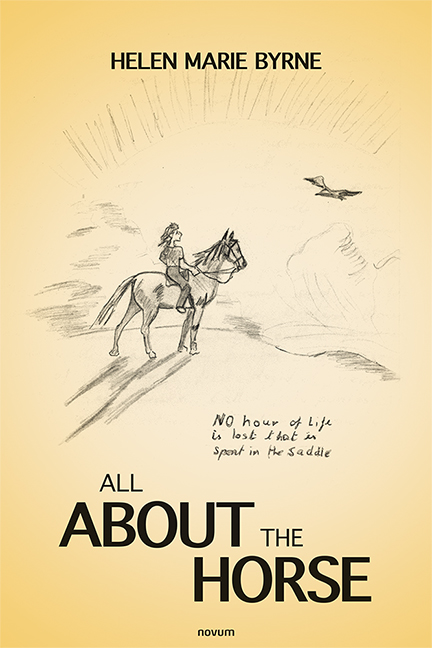
All About the Horse
USD 25,99
Format: 18 x 27 cm
Number of Pages: 42
ISBN: 978-3-99146-848-6
Release Date: 25.11.2024
All About the Horse is a comprehensive and informative guide to the history and care of horses, accessible to the novice horse or pony owner and an invaluable reference to those more experienced in equine welfare.
What is a Pony?
Scientists call all the breeds and types of horses and ponies by their scientific name, Equus (ek-wus), which means ‘a horse’. From the earliest historic times, however, ordinary people have named the different horses which they recognised. They named them according to their ages, sizes, types, and by the places where they lived, such as Shetland, Dartmoor, Arabia, and so on. Young horses which were very small were given nicknames such as ‘tyke’, which is used in the north of England, but more widely they were called ‘pony’. The word probably comes from the French word ‘poulenet’, which means ‘foal’ or ‘young horse’. Gradually, grown horses began to differ in size, and the name ‘pony’ stuck to the little horse. The more ancient and wilder breeds, especially ones like the British Mountain and Moorland breeds, were called ponies. In America, they have cow ponies. Because the game of polo was first played on very small horses, they were called polo ponies. The name is still used, although the horses now used are much larger.
Nowadays, a horse is said to be a pony if it is over a certain height. From the fifteenth century, horses’ heights were shown as so many handfuls or handsbreadths. This is the depth of the palm of the hand. The measure of one hand is now fixed at four inches (4.8 centimetres). A pony now must not be more than fourteen hands two inches (one hundred and forty-eight centimetres) high.
Shoeing
The Right Type of Shoe is Important
A fullered shoe, which has a little groove indented round it, is best for all riding purposes, as it is light and non-slip. The fore shoe should have pencilled ends to prevent the hind shoe from catching and pulling it off, and it should have a toe clip in the centre. The hind shoe should have quarter clips on either side instead of in the centre so that the hind foot may protrude a little over the end of the shoe to prevent the horse from striking and injuring its own foreleg. Both shoes usually have more clenches (nails) on the outside than on the inside.
A fullered hind shoe with calkins (high heels) is sometimes advisable. The heel supports the back tendons and is especially helpful in the case of heavily built cobby ponies. Calkins also give extra braking power when jumping and act as an additional aid to prevent slipping.
A flat machine-made shoe should never be used. It is heavy and slippery and only suitable for carthorses doing slow work.
Some of the Horse’s Ailments
The horse has many ailments, and I have listed some of them.
Laminitis
Ponies get laminitis by being left out in a large meadow and then eating too much grass.
Symptoms
1. The first symptom is that the pony will lie down very frequently. It is natural and very beneficial for ponies to lie down every day, but they seldom stay down for more than half an hour or so, and they usually choose the early morning for their resting time, so if you see your pony lying down more frequently and for longer periods than this, watch it carefully, for there may be something wrong.
2.The second symptom is that the pony’s feet will feel very hot to touch, especially the forefeet. Have shoes removed and then lead the pony over some hard, stony ground. If it walks tenderly – just like a cat on hot bricks – then you may be quite sure it has laminitis coming on.
3. The third symptom – should you fail to notice these earlier signs of laminitis developing – is that the pony’s poor feet will gradually become so painful that it will hardly be able to hobble at all, and it will squat down on its haunches – just as a dog sits down – with its forefeet stretched right out in front. When things have reached this stage unnoticed and unattended, the pony will probably have a high, feverish temperature as well.
The Cure
Bring the pony into a comfortable stable at once, with a good, deep bed. Have its shoes removed – if you have not already done so – and starve it. Give it plenty of clear water to drink – a bran mash with Epsom salts, if it will take it, may help. After this, just two days, when the pony is feeling a little better, as it should be after forty-eight hours of this treatment, increase the hay, according to size, up to four or five very small feeds a day. Keep the pony on this diet until it walks absolutely soundly again and no longer flinches when led over hard ground. Then, when you do put the pony out into a field again, begin very gradually, allowing it only half an hour’s grazing the first day, gradually working up to the ration it should have had before it became ill.
But forever after one attack of laminitis, a pony’s diet will have to be very carefully regulated, for it will, in the future, be very susceptible to the same trouble again. In addition to this internal treatment, some people advocate standing the pony in a stream for an hour or two daily, or on a bed of cool clay. But though these remedies may help to lessen the pain in its aching feet, they do not constitute a cure, which must be dealt with from within. Nothing can really prevent the tragic after-effects of a severe case of laminitis, when the sole of the foot will drop and bulge – turning convex instead of concave, as is the sole of a healthy foot – making the pony unable to shoe.
This is why laminitis should be avoided at all costs, and why the search for a smaller field is wiser than risking the pitfalls of wide acres and rich pasture.
Worms
There are two main symptoms of worms to look for.
Symptoms
1. Your pony’s tummy may look fat but its ribs will show, especially as it moves, and there will be little hollows beneath the hip bones (the pony will be tucked up).
2. The pony may be listless in behaviour, have a deep, dry cough, or continually rub its tail.
The Cure
Pick up some of the pony’s fresh droppings, seal them in a tin and send them to your vet. The vet will have them analysed and will send you the appropriate dose with instructions as to how to give it. Never attempt to concoct a dose yourself – it may do more damage than the worms! And remember that ponies who have access to hedgerow plants are less likely to harbour worms. They themselves will seek out male fern and wild garlic, which are nature’s safest antidote.
Splints
These are small, hard lumps of bone which usually form on the forelegs and cannon bones and make the pony lame. They are very common in young ponies which have been ridden too far and too fast for their age or broken in too young by too heavy a rider.
The Cure
Give the pony complete rest for many weeks. Massage with iodine oil or ointment or any veterinary product made specially for this purpose.
Curb
This is a lump, which starts small, no larger than a pea. If neglected, it soon becomes as big as an egg. It forms just below the hock joint on the hindleg and makes the pony lame. Both cause and cure are exactly the same as for splints.
Windgalls
These are little puffy swellings – again starting as small as peas but soon growing as large as an egg – round the fetlock joint. The cause is usually too much uncollected (slapdash and unrhythmical) trotting on hard, high roads, especially when the pony is coming home tired. Again, the cure is the same as for splints and curb.
Fistulous wither
Pay attention to saddle fitting.
Fitting Ponies’ Saddlery
If a pony’s saddle does not fit properly, not only will the pony feel so uncomfortable that it will be obliged to buck and probably develop other bad and unseating habits in legitimate protest, but it will also very soon hone in the shoulder, or if it is a larger pony with a prominent wither, it may even be afflicted with a fistulous wither, an unpleasant malady, hard, sometimes impossible, to cure. It starts in the guise of an ordinary saddle gall just over the wither and develops, if unheeded and neglected, into a dangerous abscess, which forms beneath the skin and is inclined to penetrate deeply between the shoulder blades. In olden days a very painful and not always successful operation was considered to be the only cure. Now it can often be tackled much more safely and humanely by injections. All these troubles come quickly and are prolonged, meaning the pony will be out of action for many weeks, often months. So it behoves all pony owners to make sure that their saddles fit.
Points to remember
1. When the rider is mounted, the front arch, or pommel, must neither press down upon nor pinch the pony’s back or wither.
2. The back arch, or cantle, must not press down unduly upon the pony’s loins.
3. The saddle flaps must not impede the progress of the shoulders.
4.No part of the saddle must press upon the spine. You should be able to see daylight right down the channel when the rider is mounted.
5. The saddle must not be far too large for the pony just to accommodate much too heavy a rider.
6. Take good care that your pony never rolls with its saddle on. If it does, it will break the tree for a certainty, and a saddle with a broken tree bears down heavily on the pony’s spine, soon causing injury. It is hard to tell if a tree is broken or not. If in doubt, take the saddle to a saddler to be examined.
Girths
Girths must also be given careful attention or they too will rub and gall. They must not be fastened so tightly that they cut into the pony’s skin, nor so loosely that the saddle sways about. If a girth is hard and misshapen through lack of cleaning, it will very soon rub and cause trouble. And it must be borne in mind that ponies who have not been ridden for some time and whose skin has become soft must be very carefully and gradually introduced to the saddle again, just as, if you, having worn nothing but your bedroom slippers for two or three months, suddenly donned a pair of hobnail boots and went for a ten-mile tramp, what blisters you would have the next day!
Bridles
Bridles must fit properly too!
1. If the browband is too tight, it will make the pony continually shake its head as it rubs and irritates its ears.
2. If the bit is too small, it will pinch the pony’s poor lips and hurt its mouth to such an extent that the pony may try to bolt or rear. Just like bucking with an uncomfortable saddle, which has its origins in genuine pain or discomfort, bolting and rearing are habits which, once formed, are hard indeed to break.
3. Too large a bit will slide from one side of the pony’s mouth to the other and be equally uncomfortable. As the type of bit used will depend entirely upon the capability of the rider and stage of training or schooling reached by the pony, advice or suggestions on this do not come within the subject matter of this little book.
Cleaning Tack
Cleaning tack, as cleaning saddlery is called, must be done regularly, or every time it is used, for badly kept tack soon cracks and breaks and lets down the rider in more ways than one!
When very dirty and caked in mud or sweat, bridles must be taken to pieces completely, each piece laid out on a table and well scrubbed with a small brush and tepid water. Hang the bridle in a warm place to dry (not on top of the hot kitchen stove). When dry, rub in saddle soap with a damp sponge. Polish off the bridle with a stable rubber or piece of soft, clean rag or chamois leather.
Every day and always after, used tack should be rubbed over with saddle soap, which will keep it soft and pliable. Exactly the same treatment applies to the saddle, only do not over-polish the seat of the saddle. Saddles are hard enough to stick to as it is, without having them highly polished! Web girths must be well brushed with a hard brush, string girths washed periodically, leather girths cleaned as any other tack, and a piece of flannel sprinkled with neat’s-foot oil folded inside to keep them extra soft.
Feeding Your Pony
If you are looking after your own pony, work out a routine for yourself and stick to it. Don’t feed your pony when you feel like it or worse still forget to feed it more often than not. There are some golden rules about feeding, and there are many technical books about stable management, but these are the basic principles.
- Water before you feed.
- Feed little and often, if possible.
- The Chief Feeding Stuffs
Oats
Best fed crushed or rolled, as they are easier to digest.
Bran
Good broad bran is best, containing plenty of flour. Dampen slightly to feed, or give as bran mash. Bran is useful to help digestion in a tired horse; it acts as a laxative. Boiled linseed and one tablespoonful of Epsom salts may be added and given once a week.
Horse nuts
Horse nuts are an excellent balanced ration for horses and are not so heating as oats, but they are very expensive.
Chaff
Chopped hay added to the feed adds bulk.
A feeding table approximately per day for a pony of 14.2 hands, ridden by a child of thirteen.
New Zealand Rugs
When correctly used, New Zealand rugs can be a very useful adjunct to the combined system (layering of rugs), for by using one, a pony, living under the combined system, which would normally be obliged to keep its own winter coat for protection when running out during the day, can be clipped or half-clipped. If a pony is needed for hunting or for fairly fast work, it should wear a New Zealand rug to keep it warm when it is turned out. This rug is windproof and waterproof and is made so that it cannot come off if the pony rolls, as would of course happen if one attempted to turn a pony out in its ordinary stable day rug. Just like a stable rug, the New Zealand rug should be properly fitted, by a saddler if possible, as individual adjustments are often needed. If the rug does not fit, it will soon rub and gall, as well as becoming dangerously displaced when the pony walks.
New Zealand rugs, if incorrectly used or abused, can be very harmful. They must not be put on and left on by a careless pony owner who verily imagines they are as good as a mobile stable! They must be removed for a reasonable period each day to allow air to get to the pony’s skin, and the pony must be thoroughly groomed and the inside of the rug well brushed and cleaned, and all the straps kept saddle-soaped and oiled to keep them soft. Otherwise, the unfortunate pony will soon suffer all manner of sores and be covered in lice – very unpleasant!
There is, however, one very grave danger in the use of a New Zealand rug. Unless the pony has been very carefully introduced to the rug and is absolutely accustomed to wearing one before it is turned out, in windy weather the wind will get under the rug, making it flap and billow, making strange noises, which will absolutely terrify the pony. Many are the serious accidents which have happened this way. The pony will make a mad charge to try to rid itself of this demon upon its back. It will try to jump any barrier which happens to loom in sight, because of the rug. The pony will find too late that it cannot raise its forelegs and so down it will come with a crash, probably resulting in serious injury.
So before a pony is trusted outside in a New Zealand rug – much less turned loose in a field in one – let it get absolutely used to wearing the rug first in the stable, then lead the pony out in it in all weathers, in calm and storm, then try it in a small field or enclosed yard and watch the pony’s reactions when it is alone and the wind gets under the rug, and finally, when the pony no longer shows the slightest sign of alarm, then and then only, venture to turn the pony out in it.
Grooming Kit
Grooming
A complete grooming kit consists of several items.
Dandy brush
Body brush
Water brush
Curry comb and rubber curry comb
Wisp
Sponge
Stable rubber
Mane combs and tail comb
Hoof pick
Hoof oil
Reasons for grooming
Firstly, you can really alter the appearance of a pony if it is properly turned out, clean, with trimmed heels, and pulled mane and tail. Secondly, it is better for the pony, because it keeps it in healthier condition and free from disease.
Scientists call all the breeds and types of horses and ponies by their scientific name, Equus (ek-wus), which means ‘a horse’. From the earliest historic times, however, ordinary people have named the different horses which they recognised. They named them according to their ages, sizes, types, and by the places where they lived, such as Shetland, Dartmoor, Arabia, and so on. Young horses which were very small were given nicknames such as ‘tyke’, which is used in the north of England, but more widely they were called ‘pony’. The word probably comes from the French word ‘poulenet’, which means ‘foal’ or ‘young horse’. Gradually, grown horses began to differ in size, and the name ‘pony’ stuck to the little horse. The more ancient and wilder breeds, especially ones like the British Mountain and Moorland breeds, were called ponies. In America, they have cow ponies. Because the game of polo was first played on very small horses, they were called polo ponies. The name is still used, although the horses now used are much larger.
Nowadays, a horse is said to be a pony if it is over a certain height. From the fifteenth century, horses’ heights were shown as so many handfuls or handsbreadths. This is the depth of the palm of the hand. The measure of one hand is now fixed at four inches (4.8 centimetres). A pony now must not be more than fourteen hands two inches (one hundred and forty-eight centimetres) high.
Shoeing
The Right Type of Shoe is Important
A fullered shoe, which has a little groove indented round it, is best for all riding purposes, as it is light and non-slip. The fore shoe should have pencilled ends to prevent the hind shoe from catching and pulling it off, and it should have a toe clip in the centre. The hind shoe should have quarter clips on either side instead of in the centre so that the hind foot may protrude a little over the end of the shoe to prevent the horse from striking and injuring its own foreleg. Both shoes usually have more clenches (nails) on the outside than on the inside.
A fullered hind shoe with calkins (high heels) is sometimes advisable. The heel supports the back tendons and is especially helpful in the case of heavily built cobby ponies. Calkins also give extra braking power when jumping and act as an additional aid to prevent slipping.
A flat machine-made shoe should never be used. It is heavy and slippery and only suitable for carthorses doing slow work.
Some of the Horse’s Ailments
The horse has many ailments, and I have listed some of them.
Laminitis
Ponies get laminitis by being left out in a large meadow and then eating too much grass.
Symptoms
1. The first symptom is that the pony will lie down very frequently. It is natural and very beneficial for ponies to lie down every day, but they seldom stay down for more than half an hour or so, and they usually choose the early morning for their resting time, so if you see your pony lying down more frequently and for longer periods than this, watch it carefully, for there may be something wrong.
2.The second symptom is that the pony’s feet will feel very hot to touch, especially the forefeet. Have shoes removed and then lead the pony over some hard, stony ground. If it walks tenderly – just like a cat on hot bricks – then you may be quite sure it has laminitis coming on.
3. The third symptom – should you fail to notice these earlier signs of laminitis developing – is that the pony’s poor feet will gradually become so painful that it will hardly be able to hobble at all, and it will squat down on its haunches – just as a dog sits down – with its forefeet stretched right out in front. When things have reached this stage unnoticed and unattended, the pony will probably have a high, feverish temperature as well.
The Cure
Bring the pony into a comfortable stable at once, with a good, deep bed. Have its shoes removed – if you have not already done so – and starve it. Give it plenty of clear water to drink – a bran mash with Epsom salts, if it will take it, may help. After this, just two days, when the pony is feeling a little better, as it should be after forty-eight hours of this treatment, increase the hay, according to size, up to four or five very small feeds a day. Keep the pony on this diet until it walks absolutely soundly again and no longer flinches when led over hard ground. Then, when you do put the pony out into a field again, begin very gradually, allowing it only half an hour’s grazing the first day, gradually working up to the ration it should have had before it became ill.
But forever after one attack of laminitis, a pony’s diet will have to be very carefully regulated, for it will, in the future, be very susceptible to the same trouble again. In addition to this internal treatment, some people advocate standing the pony in a stream for an hour or two daily, or on a bed of cool clay. But though these remedies may help to lessen the pain in its aching feet, they do not constitute a cure, which must be dealt with from within. Nothing can really prevent the tragic after-effects of a severe case of laminitis, when the sole of the foot will drop and bulge – turning convex instead of concave, as is the sole of a healthy foot – making the pony unable to shoe.
This is why laminitis should be avoided at all costs, and why the search for a smaller field is wiser than risking the pitfalls of wide acres and rich pasture.
Worms
There are two main symptoms of worms to look for.
Symptoms
1. Your pony’s tummy may look fat but its ribs will show, especially as it moves, and there will be little hollows beneath the hip bones (the pony will be tucked up).
2. The pony may be listless in behaviour, have a deep, dry cough, or continually rub its tail.
The Cure
Pick up some of the pony’s fresh droppings, seal them in a tin and send them to your vet. The vet will have them analysed and will send you the appropriate dose with instructions as to how to give it. Never attempt to concoct a dose yourself – it may do more damage than the worms! And remember that ponies who have access to hedgerow plants are less likely to harbour worms. They themselves will seek out male fern and wild garlic, which are nature’s safest antidote.
Splints
These are small, hard lumps of bone which usually form on the forelegs and cannon bones and make the pony lame. They are very common in young ponies which have been ridden too far and too fast for their age or broken in too young by too heavy a rider.
The Cure
Give the pony complete rest for many weeks. Massage with iodine oil or ointment or any veterinary product made specially for this purpose.
Curb
This is a lump, which starts small, no larger than a pea. If neglected, it soon becomes as big as an egg. It forms just below the hock joint on the hindleg and makes the pony lame. Both cause and cure are exactly the same as for splints.
Windgalls
These are little puffy swellings – again starting as small as peas but soon growing as large as an egg – round the fetlock joint. The cause is usually too much uncollected (slapdash and unrhythmical) trotting on hard, high roads, especially when the pony is coming home tired. Again, the cure is the same as for splints and curb.
Fistulous wither
Pay attention to saddle fitting.
Fitting Ponies’ Saddlery
If a pony’s saddle does not fit properly, not only will the pony feel so uncomfortable that it will be obliged to buck and probably develop other bad and unseating habits in legitimate protest, but it will also very soon hone in the shoulder, or if it is a larger pony with a prominent wither, it may even be afflicted with a fistulous wither, an unpleasant malady, hard, sometimes impossible, to cure. It starts in the guise of an ordinary saddle gall just over the wither and develops, if unheeded and neglected, into a dangerous abscess, which forms beneath the skin and is inclined to penetrate deeply between the shoulder blades. In olden days a very painful and not always successful operation was considered to be the only cure. Now it can often be tackled much more safely and humanely by injections. All these troubles come quickly and are prolonged, meaning the pony will be out of action for many weeks, often months. So it behoves all pony owners to make sure that their saddles fit.
Points to remember
1. When the rider is mounted, the front arch, or pommel, must neither press down upon nor pinch the pony’s back or wither.
2. The back arch, or cantle, must not press down unduly upon the pony’s loins.
3. The saddle flaps must not impede the progress of the shoulders.
4.No part of the saddle must press upon the spine. You should be able to see daylight right down the channel when the rider is mounted.
5. The saddle must not be far too large for the pony just to accommodate much too heavy a rider.
6. Take good care that your pony never rolls with its saddle on. If it does, it will break the tree for a certainty, and a saddle with a broken tree bears down heavily on the pony’s spine, soon causing injury. It is hard to tell if a tree is broken or not. If in doubt, take the saddle to a saddler to be examined.
Girths
Girths must also be given careful attention or they too will rub and gall. They must not be fastened so tightly that they cut into the pony’s skin, nor so loosely that the saddle sways about. If a girth is hard and misshapen through lack of cleaning, it will very soon rub and cause trouble. And it must be borne in mind that ponies who have not been ridden for some time and whose skin has become soft must be very carefully and gradually introduced to the saddle again, just as, if you, having worn nothing but your bedroom slippers for two or three months, suddenly donned a pair of hobnail boots and went for a ten-mile tramp, what blisters you would have the next day!
Bridles
Bridles must fit properly too!
1. If the browband is too tight, it will make the pony continually shake its head as it rubs and irritates its ears.
2. If the bit is too small, it will pinch the pony’s poor lips and hurt its mouth to such an extent that the pony may try to bolt or rear. Just like bucking with an uncomfortable saddle, which has its origins in genuine pain or discomfort, bolting and rearing are habits which, once formed, are hard indeed to break.
3. Too large a bit will slide from one side of the pony’s mouth to the other and be equally uncomfortable. As the type of bit used will depend entirely upon the capability of the rider and stage of training or schooling reached by the pony, advice or suggestions on this do not come within the subject matter of this little book.
Cleaning Tack
Cleaning tack, as cleaning saddlery is called, must be done regularly, or every time it is used, for badly kept tack soon cracks and breaks and lets down the rider in more ways than one!
When very dirty and caked in mud or sweat, bridles must be taken to pieces completely, each piece laid out on a table and well scrubbed with a small brush and tepid water. Hang the bridle in a warm place to dry (not on top of the hot kitchen stove). When dry, rub in saddle soap with a damp sponge. Polish off the bridle with a stable rubber or piece of soft, clean rag or chamois leather.
Every day and always after, used tack should be rubbed over with saddle soap, which will keep it soft and pliable. Exactly the same treatment applies to the saddle, only do not over-polish the seat of the saddle. Saddles are hard enough to stick to as it is, without having them highly polished! Web girths must be well brushed with a hard brush, string girths washed periodically, leather girths cleaned as any other tack, and a piece of flannel sprinkled with neat’s-foot oil folded inside to keep them extra soft.
Feeding Your Pony
If you are looking after your own pony, work out a routine for yourself and stick to it. Don’t feed your pony when you feel like it or worse still forget to feed it more often than not. There are some golden rules about feeding, and there are many technical books about stable management, but these are the basic principles.
- Water before you feed.
- Feed little and often, if possible.
- The Chief Feeding Stuffs
Oats
Best fed crushed or rolled, as they are easier to digest.
Bran
Good broad bran is best, containing plenty of flour. Dampen slightly to feed, or give as bran mash. Bran is useful to help digestion in a tired horse; it acts as a laxative. Boiled linseed and one tablespoonful of Epsom salts may be added and given once a week.
Horse nuts
Horse nuts are an excellent balanced ration for horses and are not so heating as oats, but they are very expensive.
Chaff
Chopped hay added to the feed adds bulk.
A feeding table approximately per day for a pony of 14.2 hands, ridden by a child of thirteen.
New Zealand Rugs
When correctly used, New Zealand rugs can be a very useful adjunct to the combined system (layering of rugs), for by using one, a pony, living under the combined system, which would normally be obliged to keep its own winter coat for protection when running out during the day, can be clipped or half-clipped. If a pony is needed for hunting or for fairly fast work, it should wear a New Zealand rug to keep it warm when it is turned out. This rug is windproof and waterproof and is made so that it cannot come off if the pony rolls, as would of course happen if one attempted to turn a pony out in its ordinary stable day rug. Just like a stable rug, the New Zealand rug should be properly fitted, by a saddler if possible, as individual adjustments are often needed. If the rug does not fit, it will soon rub and gall, as well as becoming dangerously displaced when the pony walks.
New Zealand rugs, if incorrectly used or abused, can be very harmful. They must not be put on and left on by a careless pony owner who verily imagines they are as good as a mobile stable! They must be removed for a reasonable period each day to allow air to get to the pony’s skin, and the pony must be thoroughly groomed and the inside of the rug well brushed and cleaned, and all the straps kept saddle-soaped and oiled to keep them soft. Otherwise, the unfortunate pony will soon suffer all manner of sores and be covered in lice – very unpleasant!
There is, however, one very grave danger in the use of a New Zealand rug. Unless the pony has been very carefully introduced to the rug and is absolutely accustomed to wearing one before it is turned out, in windy weather the wind will get under the rug, making it flap and billow, making strange noises, which will absolutely terrify the pony. Many are the serious accidents which have happened this way. The pony will make a mad charge to try to rid itself of this demon upon its back. It will try to jump any barrier which happens to loom in sight, because of the rug. The pony will find too late that it cannot raise its forelegs and so down it will come with a crash, probably resulting in serious injury.
So before a pony is trusted outside in a New Zealand rug – much less turned loose in a field in one – let it get absolutely used to wearing the rug first in the stable, then lead the pony out in it in all weathers, in calm and storm, then try it in a small field or enclosed yard and watch the pony’s reactions when it is alone and the wind gets under the rug, and finally, when the pony no longer shows the slightest sign of alarm, then and then only, venture to turn the pony out in it.
Grooming Kit
Grooming
A complete grooming kit consists of several items.
Dandy brush
Body brush
Water brush
Curry comb and rubber curry comb
Wisp
Sponge
Stable rubber
Mane combs and tail comb
Hoof pick
Hoof oil
Reasons for grooming
Firstly, you can really alter the appearance of a pony if it is properly turned out, clean, with trimmed heels, and pulled mane and tail. Secondly, it is better for the pony, because it keeps it in healthier condition and free from disease.
You might like this too :