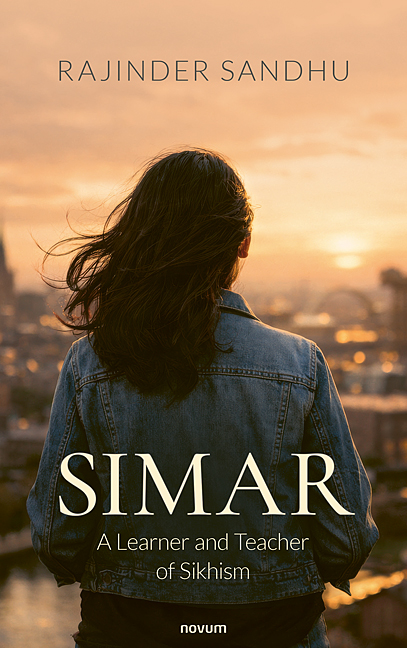
Simar
A Learner and Teacher of Sikhism
USD 24,99
Format: 13.5 x 21.5 cm
Number of Pages: 92
ISBN: 978-3-7116-1730-9
Release Date: 24.07.2026
When Simar moves from London to Glasgow, she feels lost and alone. Yet a simple classroom question begins a journey of discovery into Sikhism, identity and belonging — transforming her from newcomer into confident "learner and teacher".
Chapter 1
A New Beginning
The end of the school year is always a good feeling. Summer holidays are ahead, there’s time to spend with friends and family and, most important, to go to sleep late and get up even later! Feeling great, Simar got home and put away her school bag, knowing she would not need it for six weeks. Happy, she went to her room and started planning holiday time with her close friend Fiona, with whom she played on their primary school’s successful under-11 football team.
Both girls were expected to represent Hillingdon under-11s in the coming season and Simar planned many practice sessions with her friends during the summer as she dreamed of a future representing the Lionesses, the England women’s national football team. She also planned shopping trips to the outlets at the O2 in Greenwich with Fiona.
One unusual and surprising thing was finding her dad at home, as he would normally be at work when she got back from school. She did not give it much thought and was happy that the whole family would be around the dinner table that evening.
Her brother, Aryan, had just completed Year 7 at his secondary school and was looking forward to moving to Year 8 when the schools reopened in September. A quiet boy, he had a good sense of humour and confidence, which had helped him settle in quickly at his new school. He was hardworking and intelligent and could have passed the entrance exam to a grammar school, but the nearest was in Slough, and his parents, who both did shift work, were unable to take him there while his younger sister attended school in Hayes.
Happy to be with his friends at the local secondary, Aryan did not complain about this situation and was excited about spending the holidays playing football and cricket. He enjoyed watching football on TV and looked forward to the start of the new football season, even though Manchester United, his favourite team, was struggling and often painful to watch.
Chapter 2
A Difficult Decision
Simar’s father, Jagdeep, sat in the kitchen with her mother, Parneet, a worried expression on his face. He was about to deliver some upsetting news to both his children. He and his wife worked extra shifts at Heathrow Airport to ensure they had everything they needed, and that, as well as having to cope with high energy bills and the rising cost of food, was putting a huge strain on them.
Parneet had prepared Aryan and Simar’s favourite meal, saag (spinach) and makki di roti (cornflour rotis). She had also bought an Indian sweet, jalebi (funnel cake), for dessert from the local shop. When Simar asked her dad if he was working that evening, Jagdeep sighed and suggested they enjoy their meal first and talk afterwards.
After dinner, Jagdeep informed Simar and Aryan that he had purchased a business with a high turnover in Glasgow. It would, he hoped, give them financial security but would require a lot of hard work. He explained that the move to Scotland would end their parents’ struggle to make ends meet by working double shifts, which had started to have an impact on their health.
Simar was stunned and shocked. With her dreams in tatters, she asked how her family could afford to buy a business in Glasgow when they were struggling to make ends meet. Jagdeep explained that their house had already been sold for a good price because Hayes station was on the new Elizabeth line, making Bond Street in central London just 25 minutes away. Jagdeep also mentioned that a friend in Glasgow was selling his business there at a reduced price because of his father’s ill health. The business included a shop with accommodation close to good schools.
Confused, Simar asked, ‘But we never saw our house up for sale, and nobody came to see it.’
Jagdeep explained, ‘A couple came to view the house before the estate agents even had time to put the “For Sale” sign up. They loved it and offered over the asking price for an immediate sale. We accepted their offer a few weeks ago. The viewing took place while you were at school. We wanted to keep everything quiet until the contracts for both the house and the business were signed.’
Simar’s father tried to put a positive spin on things, saying that they were ready to start a new life in Glasgow and that, as a family, they would see more of each other. Simar reminded him that she was going into Year 6 and would be taking her SATs, so it was not an ideal time to change schools. Jagdeep assured her that Scottish schoolchildren did not take tests and that she had been accepted at a primary school within walking distance of their new home, which was recognised locally as excellent. Jagdeep also mentioned that Aryan had been accepted at a very good secondary school near where they would live.
Simar and Aryan were upset about leaving their friends and having their plans ruined, but their father told them they would be leaving for Glasgow at the end of the week and that their new schools would start in mid-August. The decision had been made; there was no turning back, despite all their tearful phone calls to friends.
Chapter 3
Starting a New School
The family’s move to Glasgow happened in a blur.
After arriving and settling into their rooms above the shop, Simar was anxious about starting a new school where she did not have any friends. On her first day at Albert Primary School, she was welcomed by the headteacher, Mr Mackay, and her new class teacher, Mr Perkins.
The children in the classroom were friendly and Mr Perkins introduced Simar to them as someone who had moved from London, asking them to make her feel welcome. Her new classmates tried to include Simar in their games during lunch, but she missed her friends and teachers from her old school.
Curiosity about her name among the children was obvious at Albert Primary. Simar learnt that they had never had a Sikh student before, but Mr Perkins did share with Simar that over fifty years ago they did have a very popular Sikh teacher (Mr Singh), and he had found a couple of old pictures of him.
Simar found that her classmates had previously learnt about the naming ceremonies in Islam and Judaism, which showed Albert Primary’s commitment to celebrating the diversity of its students.
After a few days, Mr Perkins asked Simar a series of questions to help her settle in and to help him and the children in the class to understand her and her background.
Chapter 4
What Does Simar’s Name Mean?
Question 1: ‘Simar, what is the meaning of your name and how, in Sikhism, are names given to children?’
Simar was completely unaware of the naming ceremony in Sikhism, so that evening, she sat with her parents, who explained the process of Naam Karan. Simar was then ready to share this information with Mr Perkins and all the children.
Naam Karan: the Naming Ceremony in Sikhism
Simar explained to the children that when she was about two weeks old, her mum and dad took her to the Sri Guru Singh Sabha Gurdwara (Sikh place of worship) in Southall.
That led to lots of questions before Simar had even begun discussing the naming ceremony.
‘What is a gurdwara?’ one of the students asked.
‘A doorway to the Guru,’ was Simar’s response.
‘What is a Guru?’ the same student asked again.
‘A Guru is a teacher,’ answered Simar.
‘What is a Sikh?’ another student asked.
‘A Sikh is a student, or you could say a learner. In Sikhism, we recognise ten Gurus followed by the Sri Guru Granth Sahib Ji as eternal Guru which is also the name of our holy book’ Simar explained.
Getting back to the naming ceremony, Simar explained that her parents had approached the granthi (Sikh priest) and told him they wished to name their daughter. They presented him with a rumala (a beautifully embroidered rectangular or square piece of silk used to cover the Guru Granth Sahib Ji in the gurdwara), and some money as a donation.
The granthi recited Ardas (a Sikh prayer that is said to seek the Guru’s permission to proceed with the naming ceremony). The granthi then opened the holy book at a random page to read the hukamnama (the order from the Guru for that day), and the first letter of the first word was given to her parents. It was the letter ‘S’. Karah Prashad (a sacred sweet made of flour, butter, sugar and water) was then handed to everybody in the gurdwara as a blessing and to mark the end of the prayers. Simar’s parents returned home knowing that her name was to begin with the letter ‘S’. After consulting all members of the family, they settled on her name, Simar, which means ‘one who is filled with God’s spirit’.
Learning points:
Mr Perkins was very pleased with the information Simar had provided, and her name, once so different, now meant much more to her classmates. He also told the class that from the school archives, he had found a picture of a Sikh teacher (Mr Singh) who had taught at Albert Primary from 1975 to 1978.
Chapter 5
Making New Friends
Fatima and Moshe sat with Simar during the break to share with her what they knew of the naming ceremonies in their respective religions. She was happy and shared what she had learnt with them, making two new friends in the process. School life was starting to look more positive.
Simar settled in quickly at Albert Primary School, helped by Fatima and Moshe, who ensured that her friendship group expanded rapidly. Some of her classmates found her southern accent amusing, and Simar found their Glaswegian accents equally strange. After learning about Simar’s name and being given a brief introduction to Sikhism and the eleven Gurus, they wanted to understand more about her religion and to know why Simar’s brother tied his hair in a knot on the top of his head. She explained that the knot helped keep his uncut hair together and that when he was older, he would start to wear a turban like his father.
After a few weeks, Mr Perkins told Simar that the school traditionally celebrated all religions and encouraged students from different faiths to lead on their respective religious beliefs, as many divisions between religions arose from ignorance. He asked Simar to research facts about Sikhism and to share them with her classmates.
Simar talked to her close friends, Fatima and Moshe, who told her that they had taken lessons from scholars at their respective mosques and synagogues. Next, Simar’s parents managed to get a highly knowledgeable granthi (Malkit Singh, from the
Sri Guru Singh Sabha Gurdwara Glasgow) to guide her in her research into Sikhism.
Simar was keen to share her path with Mr Perkins, who told her: ‘Let us start with the founder of Sikhism and through the year cover the other important issues such as uncut hair arising from the creation of the Khalsa, festivals like Diwali and so on. This will help us all to learn about Sikhism and to understand the religion and its community better.’
A New Beginning
The end of the school year is always a good feeling. Summer holidays are ahead, there’s time to spend with friends and family and, most important, to go to sleep late and get up even later! Feeling great, Simar got home and put away her school bag, knowing she would not need it for six weeks. Happy, she went to her room and started planning holiday time with her close friend Fiona, with whom she played on their primary school’s successful under-11 football team.
Both girls were expected to represent Hillingdon under-11s in the coming season and Simar planned many practice sessions with her friends during the summer as she dreamed of a future representing the Lionesses, the England women’s national football team. She also planned shopping trips to the outlets at the O2 in Greenwich with Fiona.
One unusual and surprising thing was finding her dad at home, as he would normally be at work when she got back from school. She did not give it much thought and was happy that the whole family would be around the dinner table that evening.
Her brother, Aryan, had just completed Year 7 at his secondary school and was looking forward to moving to Year 8 when the schools reopened in September. A quiet boy, he had a good sense of humour and confidence, which had helped him settle in quickly at his new school. He was hardworking and intelligent and could have passed the entrance exam to a grammar school, but the nearest was in Slough, and his parents, who both did shift work, were unable to take him there while his younger sister attended school in Hayes.
Happy to be with his friends at the local secondary, Aryan did not complain about this situation and was excited about spending the holidays playing football and cricket. He enjoyed watching football on TV and looked forward to the start of the new football season, even though Manchester United, his favourite team, was struggling and often painful to watch.
Chapter 2
A Difficult Decision
Simar’s father, Jagdeep, sat in the kitchen with her mother, Parneet, a worried expression on his face. He was about to deliver some upsetting news to both his children. He and his wife worked extra shifts at Heathrow Airport to ensure they had everything they needed, and that, as well as having to cope with high energy bills and the rising cost of food, was putting a huge strain on them.
Parneet had prepared Aryan and Simar’s favourite meal, saag (spinach) and makki di roti (cornflour rotis). She had also bought an Indian sweet, jalebi (funnel cake), for dessert from the local shop. When Simar asked her dad if he was working that evening, Jagdeep sighed and suggested they enjoy their meal first and talk afterwards.
After dinner, Jagdeep informed Simar and Aryan that he had purchased a business with a high turnover in Glasgow. It would, he hoped, give them financial security but would require a lot of hard work. He explained that the move to Scotland would end their parents’ struggle to make ends meet by working double shifts, which had started to have an impact on their health.
Simar was stunned and shocked. With her dreams in tatters, she asked how her family could afford to buy a business in Glasgow when they were struggling to make ends meet. Jagdeep explained that their house had already been sold for a good price because Hayes station was on the new Elizabeth line, making Bond Street in central London just 25 minutes away. Jagdeep also mentioned that a friend in Glasgow was selling his business there at a reduced price because of his father’s ill health. The business included a shop with accommodation close to good schools.
Confused, Simar asked, ‘But we never saw our house up for sale, and nobody came to see it.’
Jagdeep explained, ‘A couple came to view the house before the estate agents even had time to put the “For Sale” sign up. They loved it and offered over the asking price for an immediate sale. We accepted their offer a few weeks ago. The viewing took place while you were at school. We wanted to keep everything quiet until the contracts for both the house and the business were signed.’
Simar’s father tried to put a positive spin on things, saying that they were ready to start a new life in Glasgow and that, as a family, they would see more of each other. Simar reminded him that she was going into Year 6 and would be taking her SATs, so it was not an ideal time to change schools. Jagdeep assured her that Scottish schoolchildren did not take tests and that she had been accepted at a primary school within walking distance of their new home, which was recognised locally as excellent. Jagdeep also mentioned that Aryan had been accepted at a very good secondary school near where they would live.
Simar and Aryan were upset about leaving their friends and having their plans ruined, but their father told them they would be leaving for Glasgow at the end of the week and that their new schools would start in mid-August. The decision had been made; there was no turning back, despite all their tearful phone calls to friends.
Chapter 3
Starting a New School
The family’s move to Glasgow happened in a blur.
After arriving and settling into their rooms above the shop, Simar was anxious about starting a new school where she did not have any friends. On her first day at Albert Primary School, she was welcomed by the headteacher, Mr Mackay, and her new class teacher, Mr Perkins.
The children in the classroom were friendly and Mr Perkins introduced Simar to them as someone who had moved from London, asking them to make her feel welcome. Her new classmates tried to include Simar in their games during lunch, but she missed her friends and teachers from her old school.
Curiosity about her name among the children was obvious at Albert Primary. Simar learnt that they had never had a Sikh student before, but Mr Perkins did share with Simar that over fifty years ago they did have a very popular Sikh teacher (Mr Singh), and he had found a couple of old pictures of him.
Simar found that her classmates had previously learnt about the naming ceremonies in Islam and Judaism, which showed Albert Primary’s commitment to celebrating the diversity of its students.
After a few days, Mr Perkins asked Simar a series of questions to help her settle in and to help him and the children in the class to understand her and her background.
Chapter 4
What Does Simar’s Name Mean?
Question 1: ‘Simar, what is the meaning of your name and how, in Sikhism, are names given to children?’
Simar was completely unaware of the naming ceremony in Sikhism, so that evening, she sat with her parents, who explained the process of Naam Karan. Simar was then ready to share this information with Mr Perkins and all the children.
Naam Karan: the Naming Ceremony in Sikhism
Simar explained to the children that when she was about two weeks old, her mum and dad took her to the Sri Guru Singh Sabha Gurdwara (Sikh place of worship) in Southall.
That led to lots of questions before Simar had even begun discussing the naming ceremony.
‘What is a gurdwara?’ one of the students asked.
‘A doorway to the Guru,’ was Simar’s response.
‘What is a Guru?’ the same student asked again.
‘A Guru is a teacher,’ answered Simar.
‘What is a Sikh?’ another student asked.
‘A Sikh is a student, or you could say a learner. In Sikhism, we recognise ten Gurus followed by the Sri Guru Granth Sahib Ji as eternal Guru which is also the name of our holy book’ Simar explained.
Getting back to the naming ceremony, Simar explained that her parents had approached the granthi (Sikh priest) and told him they wished to name their daughter. They presented him with a rumala (a beautifully embroidered rectangular or square piece of silk used to cover the Guru Granth Sahib Ji in the gurdwara), and some money as a donation.
The granthi recited Ardas (a Sikh prayer that is said to seek the Guru’s permission to proceed with the naming ceremony). The granthi then opened the holy book at a random page to read the hukamnama (the order from the Guru for that day), and the first letter of the first word was given to her parents. It was the letter ‘S’. Karah Prashad (a sacred sweet made of flour, butter, sugar and water) was then handed to everybody in the gurdwara as a blessing and to mark the end of the prayers. Simar’s parents returned home knowing that her name was to begin with the letter ‘S’. After consulting all members of the family, they settled on her name, Simar, which means ‘one who is filled with God’s spirit’.
Learning points:
Mr Perkins was very pleased with the information Simar had provided, and her name, once so different, now meant much more to her classmates. He also told the class that from the school archives, he had found a picture of a Sikh teacher (Mr Singh) who had taught at Albert Primary from 1975 to 1978.
Chapter 5
Making New Friends
Fatima and Moshe sat with Simar during the break to share with her what they knew of the naming ceremonies in their respective religions. She was happy and shared what she had learnt with them, making two new friends in the process. School life was starting to look more positive.
Simar settled in quickly at Albert Primary School, helped by Fatima and Moshe, who ensured that her friendship group expanded rapidly. Some of her classmates found her southern accent amusing, and Simar found their Glaswegian accents equally strange. After learning about Simar’s name and being given a brief introduction to Sikhism and the eleven Gurus, they wanted to understand more about her religion and to know why Simar’s brother tied his hair in a knot on the top of his head. She explained that the knot helped keep his uncut hair together and that when he was older, he would start to wear a turban like his father.
After a few weeks, Mr Perkins told Simar that the school traditionally celebrated all religions and encouraged students from different faiths to lead on their respective religious beliefs, as many divisions between religions arose from ignorance. He asked Simar to research facts about Sikhism and to share them with her classmates.
Simar talked to her close friends, Fatima and Moshe, who told her that they had taken lessons from scholars at their respective mosques and synagogues. Next, Simar’s parents managed to get a highly knowledgeable granthi (Malkit Singh, from the
Sri Guru Singh Sabha Gurdwara Glasgow) to guide her in her research into Sikhism.
Simar was keen to share her path with Mr Perkins, who told her: ‘Let us start with the founder of Sikhism and through the year cover the other important issues such as uncut hair arising from the creation of the Khalsa, festivals like Diwali and so on. This will help us all to learn about Sikhism and to understand the religion and its community better.’
You might like this too :